Technology
How ISR Video Streaming differs from Traditional Streaming
Latency tolerance, network attributes, error correction, transport protocols, metadata synchronization, and security all factor heavily in the design of ISR streaming networks.

ISR (Intelligence, Surveillance, Reconnaissance) Video Streaming is fundamentally different from Traditional Streaming.
While Traditional Streaming serves experiential applications such as entertainment, learning, and collaboration, ISR Video Streaming serves applications for real-time decision making and remote operations. These differences result in significantly dissimilar objectives, networks, and architectural considerations.
These differences are best understood in terms of latency tolerance, network attributes, error correction, transport protocols, metadata synchronization, and security.
This Insight offers a high-level explanation of each.
Latency Tolerance
Over-the-Top (OTT) Video Services (NetFlix, Amazon Prime, DirecTV Stream) typically have a latency lagging from 20 to 45 seconds behind real-time transmissions. This helps ensure a quality viewing experience by compensating for a variety of factors, such as internet speeds, streaming protocols, and hardware limitations.
The viewing experience is paramount for these services and latency is tolerated to achieve this requirement.
ISR Video applications necessitate that an operator views one, or more, simultaneous streams in the present moment to make critical decisions and carry out instantaneous actions. Latency is a major impediment for these applications, which often demand sub-second latency performance.
Network Attributes
Traditional video streaming tends to leverage relatively stable, high-bandwidth internet paths. This allows streaming to run over TCP/HTTP and which offers benefit from the built-in retransmission and congestion control features without special handling.
Additionally, the available headroom allows players to “pre-fetch” video chunks that are held in buffers ahead of playback.
ISR video streams regularly need to perform in DDIL (Denied, Disrupted/Degraded, Intermittent, Limited) and other volatile environments. This results in a high degree of unpredictability in terms of packet loss, constrained bandwidth, and signal loss across a broad range of networks. These include satellite, cellular, HF/UHF, and RF links whose performance contends with terrain and atmospheric degradation, in addition to congestion and jamming.
This network and bandwidth environment has a major impact on how ISR streaming services are architected, leveraging specialized sets of protocols and techniques to achieve resilience at low latency.
Error Correction
Error Correction represents a major difference between Traditional and ISR Streaming.
In traditional streaming, lost data is detected at the receiver, who requests retransmissions from the sender. While the receiver waits to receive the retransmission, data builds in a buffer where it is held and sequenced for smooth playback. This TCP/HTTP-based approach results in considerable latency.
ISR streaming leverages Forward Error Correction (FEC) algorithms. This technique sends a limited number of redundant packets along with the stream, providing algorithmic instruction to the receiver on how to reconstruct lost packets without the need for retransmission and eliminating the associated latency.
Some advanced FEC implementations are adaptive, dynamically increasing the number of redundant packets transmitted during degradation to ensure stream reception and decreasing redundant packets when conditions normalize.
Transport Protocols
HTTP-based Adaptive Bit Rate (ABR) is a traditional streaming (HLS, DASH) technique that improves performance and viewer experience by breaking the TCP transport stream into “chunks” of video (2-4 seconds long for live streams). The video encoder creates these “chunks” across a range of resolutions that are populated across the CDN.
The media player at the viewing location monitors network speeds and continuously adapts to select the bit rate (resolution) that will provide optimal viewing for the available network speed.
This allows traditional streaming platforms to optimize performance by reducing the workload/size of playback buffers and by reducing start-up times by having low resolution play immediately upon initiation, while gradually raising resolution to the most appropriate level.
This method is problematic for ISR streaming due to the latency associated with the receiver processing the video “chunks” and the bandwidth required to support the contribution of video at multiple resolutions at the origination site.
ISR streaming employs advanced transport protocols (SRT, RIST) built on top of UDP transport for live streaming. This approach adds security, packet recovery, and congestion control to ensure reliable, low latency delivery over the unpredictable environments encountered by tactical links.
UDP transport supports tunnelling, which offers a variety of desired benefits for these applications, including:
Video payload is encapsulated to appear as standard data that traverse NAT and firewalls without being dropped or blocked, improving reliability.
Stream prioritization to map Quality of Service (QoS) and ensure priority handling of the most critical live feeds and data.
Implementing Encryption and Security at the tunnel level, allowing the raw video and data streams to be delivered in real-time.
More advanced ISR transport also includes bonding across multiple networks. This approach aggregates diverse networks - such as UHF, cellular, and satellite – into one logical pipe where video and data can be dynamically routed over the best available path.
Metadata Synchronization
Unlike traditional streaming, where metadata contains a relatively small amount of program information, ISR streaming requires that significant metadata be precisely time synchronized to each video frame.
This metadata is termed Key Value Length (KVL) and includes information like GPS coordinates, camera parameters, aircraft telemetry, and timestamping. It is defined in standards such as STANAG 4609 (NATO) and MISB ST 0601(Unmanned Air Systems).
This data is often synchronized across multiple source streams to provide a comprehensive view of multiple feeds that allow analysts and targeting systems to operate with precision.
Security
ISR streams typically require that transport employ hardened, military-grade, end-to-end encryption (such as AES-256) due to the classified and sensitive nature of the content. This encryption is typically embedded directly onto hardware encoders at the tactical edge with decryption keys strictly restricted to command-and-control endpoints.
This level of security is at a significantly higher level than is found in traditional streaming, which relies on session-based HTTPS/TLS transport encryption coupled with application layer Digital Rights Management (DRM) to protect against unauthorized usage and piracy.
__________________________________________________________________________________
In short: traditional streaming is engineered for smooth playback at internet scale over dependable networks; ISR streaming is engineered for the lowest possible decision-latency, over unreliable/contested links, with mission metadata and military-grade encryption embedded.
Latest Insights

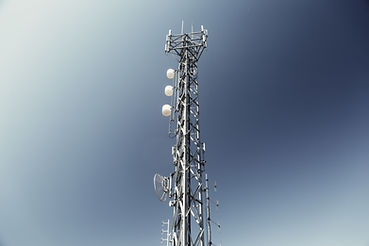
Reliable, Robust, and Resilient in Modern Communications
Reliability, Robustness, and Resiliency are critical and disparate elements of modern communications systems. Understanding the design factors and metrics of each element is essential in evaluating, deploying, and maintain these systems. This Insight aims to better define these terms.